TikTok Shop US is changing how affiliate commerce works.
Unlike older affiliate models that depend on passive link sharing or large fixed-fee creator deals, TikTok Shop runs on a decentralized, performance-based system. Creators earn when products sell. Brands scale through content and only pay when that content converts.
That model changes the incentives on both sides. Creators can monetize without taking on inventory, fulfillment, or customer support. Brands can build a large creator-driven sales network without committing the same level of upfront budget required by traditional influencer campaigns.
Using FastMoss data, this article looks at how that system works in practice, and what brands and creators can learn from the products, creators, and channels driving the most sales on TikTok Shop US.
1. Creators follow products with demand and strong commission rates
For creators, product selection is usually the biggest factor in affiliate success.
In the US market, experienced creators tend to focus on two numbers first: sales volume and open commission rate. Sales volume helps confirm that demand already exists. Commission rate tells them whether the product is worth promoting.
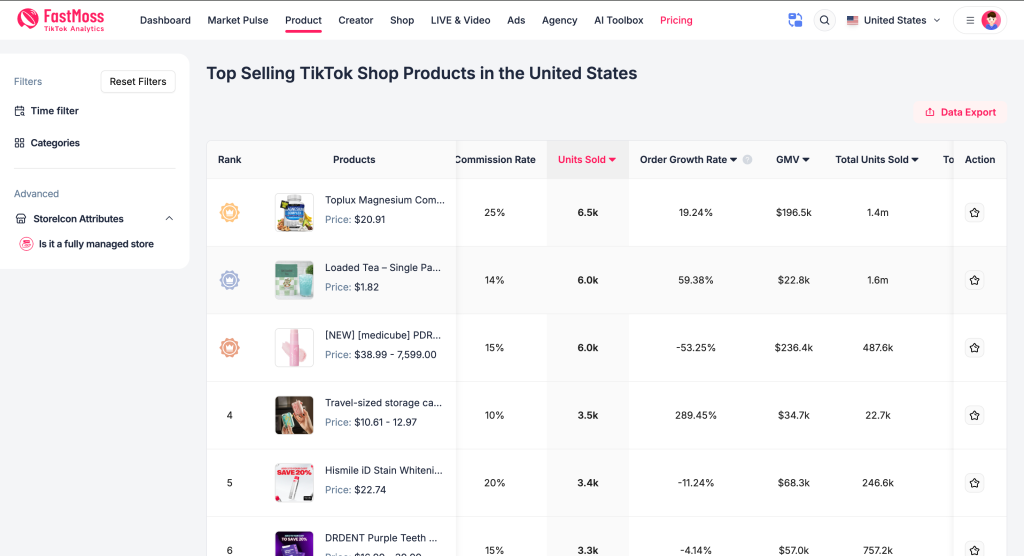
A product like Toplux Magnesium Complex makes the appeal easy to understand. Based on the FastMoss example, it sells for $20.91 and offers a 25% commission, which works out to about $5.23 per sale.
For creators, that is a clean model. They do not need to buy stock, manage shipping, or handle customer support. Their role is to create content that converts. If one short video performs well, the earnings can add up quickly.
This is why commission structure matters so much. Brands that offer attractive rates tend to receive more creator applications, more content output, and more opportunities to gain traction on the platform.
2. Brands need creators who can distribute, not just creators who look large on paper
From a brand’s perspective, affiliate growth is a distribution challenge.
The goal is not simply to recruit more creators. It is to recruit creators who can consistently generate reach and sales on a performance basis. Without that filter, product seeding becomes expensive and inefficient.
This is where FastMoss creator analytics can help, especially metrics like Viral Index.
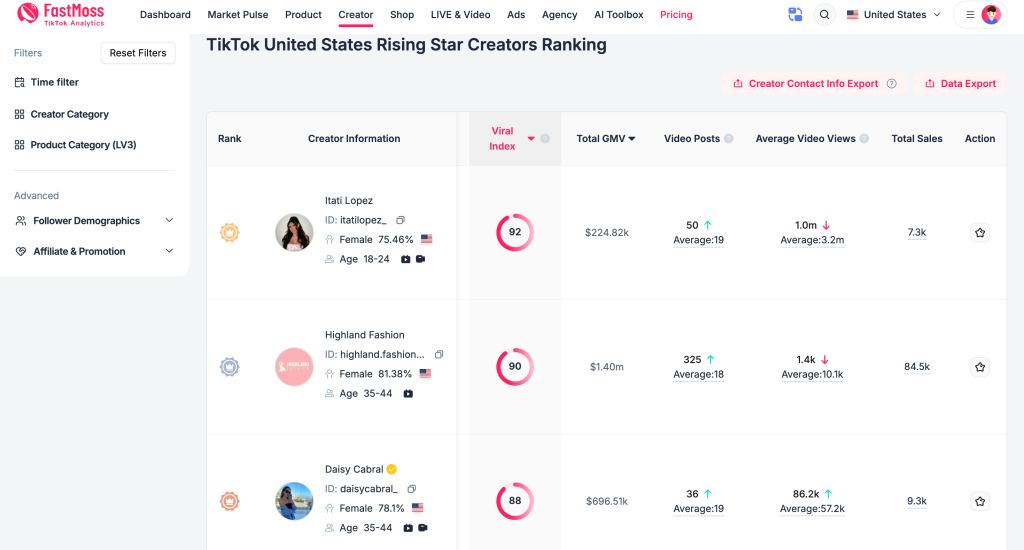
A high Viral Index can suggest that a creator’s content is breaking beyond their existing follower base and performing well in TikTok’s recommendation system. That matters because on TikTok, follower count alone does not reliably predict reach or conversion potential.
For brands, this provides a more practical way to evaluate partners. Instead of relying only on visible audience size, they can look for signs that a creator repeatedly produces content that travels.
3. GMV data shows where revenue is actually coming from
One of the best ways to understand the TikTok Shop affiliate model is to look at how top creators generate sales across formats.
FastMoss creator dashboards make this visible by breaking down GMV across shoppable videos and live sessions.
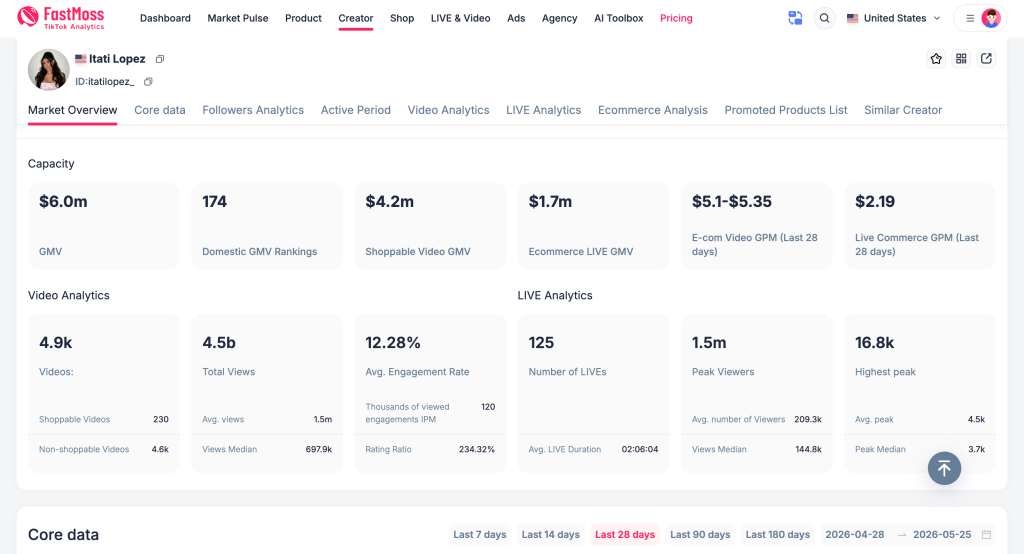
In the FastMoss example, total GMV reaches $6.0M. Of that, $4.2M comes from shoppable videos and $1.7M comes from live sessions.
| Performance channel | GMV | Share | What it means |
|---|---|---|---|
| Shoppable short videos | $4.2M | ~70.0% | Main source of long-tail sales and ongoing discovery |
| LIVE broadcasting | $1.7M | ~28.3% | Strong for short-term conversion spikes and promotions |
| Total GMV | $6.0M | 100.0% | Shows how far a creator-led model can scale |
The channel mix is the key takeaway.
For brands coming from Asian live commerce markets, the US pattern may look very different. In this example, short videos generate most of the revenue, well ahead of live sessions.
That likely reflects how US consumers use TikTok. For many users, the platform functions more as a discovery engine than a scheduled shopping destination. A strong shoppable video can keep generating views, search traffic, and conversions well after it is posted. Live sessions still matter, but short-form video appears to create the more durable sales engine.
4. What brands should do with this insight
The affiliate opportunity on TikTok Shop US is clear. The harder part is execution.
Brands that scale well usually do three things consistently: they offer commission rates creators actually care about, they recruit creators with proven content momentum, and they treat shoppable short video as a core conversion channel rather than a supporting asset.
FastMoss helps make those decisions more concrete. It gives brands a way to track product demand, compare creator performance, and understand which formats are driving results. For creators, it helps narrow the field and identify products with both demand and earning potential.
Conclusion
TikTok Shop US has built a different kind of affiliate system, one shaped by creator output, platform-native discovery, and performance-based incentives.
For creators, it lowers the barrier to monetization. For brands, it offers a scalable path to growth without depending entirely on fixed-fee campaigns or paid media. The opportunity is real, but the teams that benefit most are usually the ones making better decisions on product selection, creator recruitment, commission design, and content mix.
That is where data becomes useful.